

The diesel engine will remain the preferred powertrain for agricultural machinery for many years to come.
Renewable synthetic fuels can play a significant role in reducing CO emissions in agriculture.
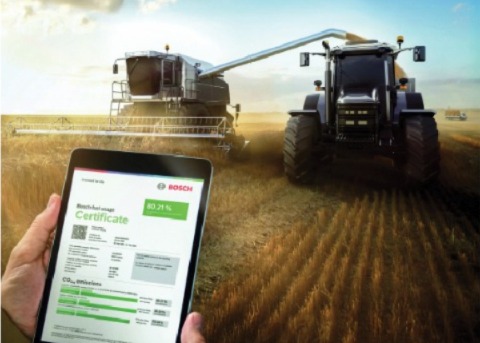
The Digital Fuel Twin document and certify the use of renewable synthetic fuels.
Hydrogen engines offer many of the advantages of diesel engines and utilize approximately 80% of the same technology.
Germany – In 2025 alone, more than two million tractors and other agricultural vehicles will be produced worldwide. And according to Bosch, more than 90% of these will be powered by diesel engines. The diesel engine’s robustness and high performance, combined with low weight, make it ideal for nearly all applications and performance classes. At the Agritechnica trade fair in Hanover, Bosch demonstrated how this well-established technology can further reduce CO emissions. “Renewable synthetic fuels immediately make the operation of both new and existing vehicles much more climate-friendly. And in the future, hydrogen engines and electrification will help make agriculture much more sustainable,” says Jan-Oliver Roehrl, Executive Vice President of Bosch Power Solutions and head of Bosch’s commercial vehicle business.
Even in 2035, Bosch predicts that nine out of ten new agricultural vehicles will still be powered by diesel engines. Therefore, the company will continue to offer and develop suitable injection and urea dosing technologies for exhaust gas treatment for the different vehicle types in this market segment. At the same time, Bosch offers new options for the most climate-friendly powertrain possible with various electrification solutions as well as components for hydrogen engines.
Renewable synthetic fuels make internal combustion engines more climate-friendly
All major markets worldwide have already implemented comprehensive emissions regulations that set maximum values for nitrogen oxides and particulates for agricultural vehicles. As a result, urea-dosed SCR exhaust gas aftertreatment systems have become standard for diesel engines in vehicle classes above 56 kilowatts. However, until now, their climate-related emissions have been regulated only to a limited extent. A simple option currently available to significantly reduce the carbon emissions of existing and new vehicles is the use of renewable synthetic fuels such as HVO100.

Because these fuels are based largely on residual and waste materials, they are much more climate-friendly than fossil fuels in terms of total carbon emissions. They are also drop-in fuels, meaning they can be blended with regular diesel when needed. And, like diesel, they are easy to store. Because Bosch already considered compatibility with these fuels when developing its injection technology, they are suitable for use in a wide range of products.
Digital Fuel Twin documents the use of renewable synthetic fuels
Bosch’s Digital Fuel Twin (DFT) system demonstrates the extent to which renewable synthetic fuels reduce the carbon footprint of each vehicle. DFT, a fully digital software solution, documents the dispensed fuel quantities and their sustainability throughout the entire process, from production and transportation to the filling station. It provides operators with certificates corresponding to the proportions of fossil and renewable synthetic fuels used in their vehicles. These certificates document the total fuel used and even the relative carbon footprint of the vehicle’s operation.
Hydrogen engines are built on tried-and-tested foundations
The hydrogen engine is a new type of powertrain that takes climate action a step further. If the hydrogen fueling the engines is produced with renewable energy, this could mean significant progress for the climate. Bosch has decades of expertise working on intake manifold injection and direct injection systems. Approximately 80 percent of the technology involved is transferable from conventional internal combustion engines. The technology company is currently involved in more than 100 development projects with customers worldwide. “Agricultural vehicles are often operated at low speeds and high loads. This is where hydrogen engines can really shine with their high efficiency and robustness,” said Roehrl. Bosch injection The first applications of hydrogen engines incorporating this technology will be launched this year.” He says.
Electrification Solutions for Agricultural Machinery
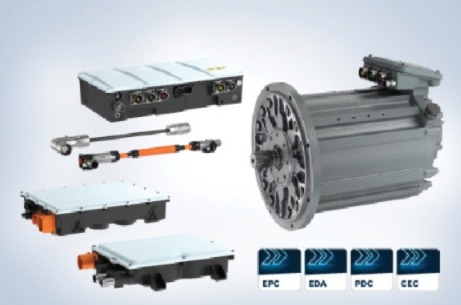
Electrification of drive systems and power-driven equipment is another efficient and environmentally friendly option for agricultural machinery. Bosch Rexroth already offers a wide range of motors, inverters, on-board chargers, DC/DC converters, software, and accessories with its eLION electrification portfolio. Designed for demanding applications, the portfolio is designed for operation in DC voltages up to 850 volts and is complemented by suitable transmissions and hydraulic solutions. The portfolio is currently being expanded to include components for 96-volt vehicle electrical systems. The comprehensive eLION Power and Motion Control software suite will also be available by the end of 2025.
Meanwhile, Bosch Engineering is offering a newly developed high-performance solution for battery voltages up to 800 volts. This new electric powertrain is compact, offers high power density, and high efficiency, simplifying the electrification of existing equipment platforms. Depending on the application, the system can be used as a fully battery-electric powertrain for small and medium-sized agricultural machinery. It can be used as a hybrid powertrain or in conjunction with a diesel engine in large agricultural machinery.
In addition to electric powertrains for auxiliary systems, Bosch also offers other mechatronic subsystems with high-voltage technology for electrified commercial and off-road vehicles, such as cooling fans. Here too, the specific requirements of the commercial vehicle segment, including those related to safety and security, are taken into account. The components are compact and use a common inverter concept, allowing for minimal effort in customizing customer-specific adaptations.